Surgical Procedures
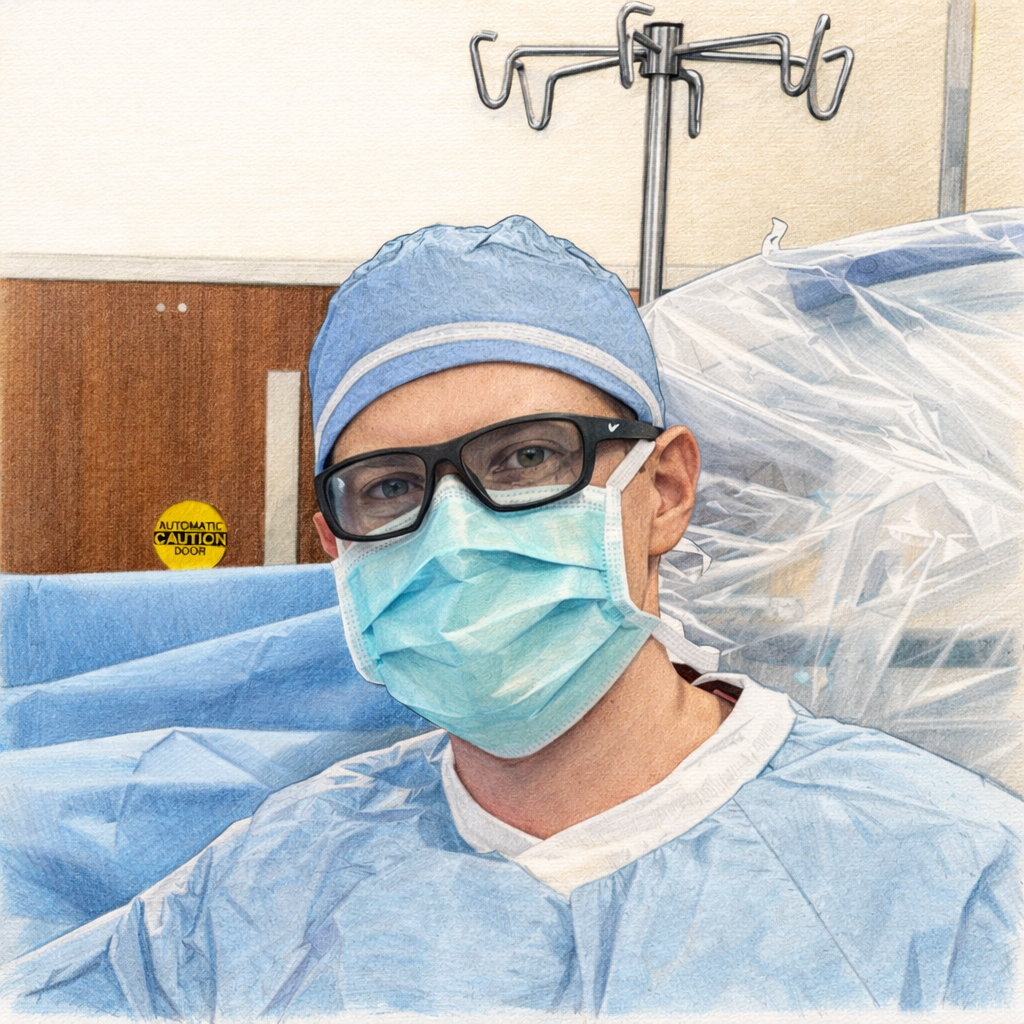
Dr. Nicholas Apseloff, MD performs a wide range of arthroscopic and open knee surgeries, ranging from simple to complex. Dr. Apseloff has a clinical and research interest in knee joint preservation, aiming to delay knee replacement for as long as possible.
-
Knee arthroscopy is a minimally invasive surgical procedure used to diagnose and treat a wide range of knee problems. The camera provides a clear, magnified view of the cartilage, meniscus, and ligaments. Specialized instruments are inserted through additional small incisions to treat the problem.
Because the procedure is minimally invasive, arthroscopy typically results in:
Less pain after surgery
Smaller scars
Faster recovery
Lower risk of complications compared with open surgery
Knee arthroscopy is commonly used to evaluate and treat:
Meniscus tears (repair or trimming)
Ligament injuries, including ACL and PCL tears
Cartilage damage or loose cartilage fragments
Mechanical symptoms such as locking or catching
Inflammation or scar tissue
Loose bodies inside the knee joint
-
Meniscus repair is a minimally invasive surgical procedure used to treat certain types of meniscus tears in the knee. The goal of meniscus repair is to preserve and heal the natural meniscus, which plays a critical role in knee stability, shock absorption, and long-term joint health—especially for active individuals and athletes.
Meniscus repair involves suturing the torn meniscus back together to allow it to heal, rather than removing the torn tissue. The procedure is performed arthroscopically through small incisions using a camera and specialized instruments.
Not all meniscus tears can be repaired. Repair is most successful when the tear:
Is located in the outer, better-blood-supply portion of the meniscus
Occurs in younger or active patients
Is associated with knee instability or an ACL injury
Dr. Apseloff will determine whether repair is appropriate based on tear pattern, location, and your activity goals.
-
Meniscectomy is a minimally invasive surgical procedure used to treat certain meniscus tears by removing the damaged portion of the meniscus while preserving as much healthy tissue as possible. It is most often performed when a tear cannot be safely or reliably repaired.
Meniscectomy may be recommended when:
The meniscus tear is in an area with poor blood supply
The tear is degenerative or frayed
The tissue quality is not suitable for repair
Symptoms persist despite non-surgical treatment
Mechanical symptoms interfere with daily activities or sports
During a meniscectomy, arthroscopic techniques are used to carefully trim away unstable or torn meniscus tissue. The goal is to restore smooth knee motion, relieve pain, and eliminate mechanical symptoms such as catching or locking—while preserving the remaining meniscus to protect the knee joint.
Dr. Apseloff will always consider meniscus repair first when appropriate, especially in younger or active patients.
-
The anterior cruciate ligament (ACL) is one of the key ligaments that helps control rotation and forward movement of the knee. ACL injuries commonly occur during sports that involve cutting, pivoting, or sudden stops.
ACL reconstruction involves replacing the torn ligament with a new tissue graft that acts as a scaffold for a new ligament to form.
The procedure is performed using arthroscopic (minimally invasive) techniques, through small incisions, using a camera and specialized instruments. This allows for precise placement of the new ligament while minimizing damage to surrounding tissues.
The new ACL is created using one of the following graft options:
Autograft – tissue taken from your own body, most commonly the patellar tendon, quadriceps tendon, or hamstring tendons
Allograft – donor tissue
Dr. Apseloff will discuss the advantages and disadvantages of each option based on your age, activity level, sport, and recovery goals.
-
Revision ACL reconstruction is a specialized surgical procedure performed when a prior ACL reconstruction has failed and knee instability or pain persists. Revision surgery is more complex than first-time ACL reconstruction and requires careful planning, advanced techniques, and an individualized rehabilitation strategy.
Revision ACL reconstruction involves removing the failed graft and reconstructing the ACL again using a new tissue graft. Because prior surgery alters the anatomy of the knee, revision procedures often require:
Detailed imaging and preoperative planning
Careful management of previous tunnels or hardware
Addressing additional problems such as meniscus tears, cartilage damage, or malalignment
The procedure is typically performed using minimally invasive arthroscopic techniques, but may involve more than one surgical stage in certain cases.
Some revision ACL reconstructions can be completed in one surgery.
In other cases, a two-stage approach is required:The first stage addresses bone defects or enlarged tunnels using bone grafting
The second stage reconstructs the ACL after the bone has healed
Dr. Apseloff will explain which approach is safest and most effective for your knee.
-
A multiligament knee injury occurs when two or more of the major ligaments of the knee are torn. These injuries are uncommon but serious and often result from high-energy trauma or severe sports injuries. Because multiple stabilizers of the knee are affected, these injuries require specialized evaluation, careful planning, and expert surgical management.
The knee is stabilized by four major ligaments:
ACL (anterior cruciate ligament) – controls rotation and forward motion
PCL (posterior cruciate ligament) – controls backward motion
MCL (medial collateral ligament) – stabilizes the inner knee
LCL / PLC (lateral collateral ligament / posterolateral corner) – stabilizes the outer knee and rotation
A multiligament injury involves damage to two or more of these structures and may occur with or without a knee dislocation.
Surgical treatment is often recommended for active patients and involves ligament repair and/or reconstruction with tissue grafts using both open and arthroscopic techniques.
-
Knee osteotomy is a joint-preserving surgical procedure designed to relieve pain, improve function, and protect the knee joint by correcting abnormal alignment. It is most commonly used in active patients with arthritis or cartilage damage that affects one side of the knee. It can also be performed to protect a meniscus or cartilage transplant procedure, or to treat ligament instability (e.g., failed ACL reconstruction).
When the leg is bow-legged (varus) or knock-kneed (valgus), extra stress is placed on one side of the knee. Rather than replacing the knee, an osteotomy realigns the leg to shift weight away from the damaged area and onto healthier cartilage.
The location of the correction depends on where the alignment problem originates:
High Tibial Osteotomy (HTO)
Performed on the upper portion of the tibia (shinbone)
Distal Femoral Osteotomy (DFO)
Performed on the lower portion of the femur (thighbone)
Double Level Osteotomy (DLO)
Combined HTO + DFO (used for severe cases)
-
Quadriceps and patellar tendon repairs are surgical procedures performed to restore the extensor mechanism of the knee—the system that allows you to straighten your knee, stand from a seated position, and walk normally. These injuries are serious and typically require prompt surgical treatment to regain knee function and strength.
Complete ruptures of the quadriceps or patellar tendon almost always require surgical repair. Early surgery—typically within the first few weeks—leads to better outcomes and easier restoration of normal tendon length and strength.
Surgery involves reattaching the torn tendon to bone using strong sutures and anchors or other fixation methods. The goal is to restore the normal anatomy and allow the tendon to heal securely.
These procedures are typically performed through a small incision over the front of the knee.
Dr. Apseloff also performs revision quadriceps & patellar tendon repair, as well as reconstruction with tissue grafts.
-
Medial patellofemoral ligament (MPFL) reconstruction is a surgical procedure that restores stability to the kneecap by reconstructing the damaged MPFL. The ligament is recreated using a soft-tissue graft and secured to the patella and femur in an anatomic position.
The procedure is typically performed using minimally invasive techniques and is often combined with arthroscopy to evaluate and treat cartilage injury if present.
In some patients, MPFL reconstruction may be combined with additional procedures to address alignment or tracking issues, depending on individual anatomy.